
Why this topic matters in the UAE
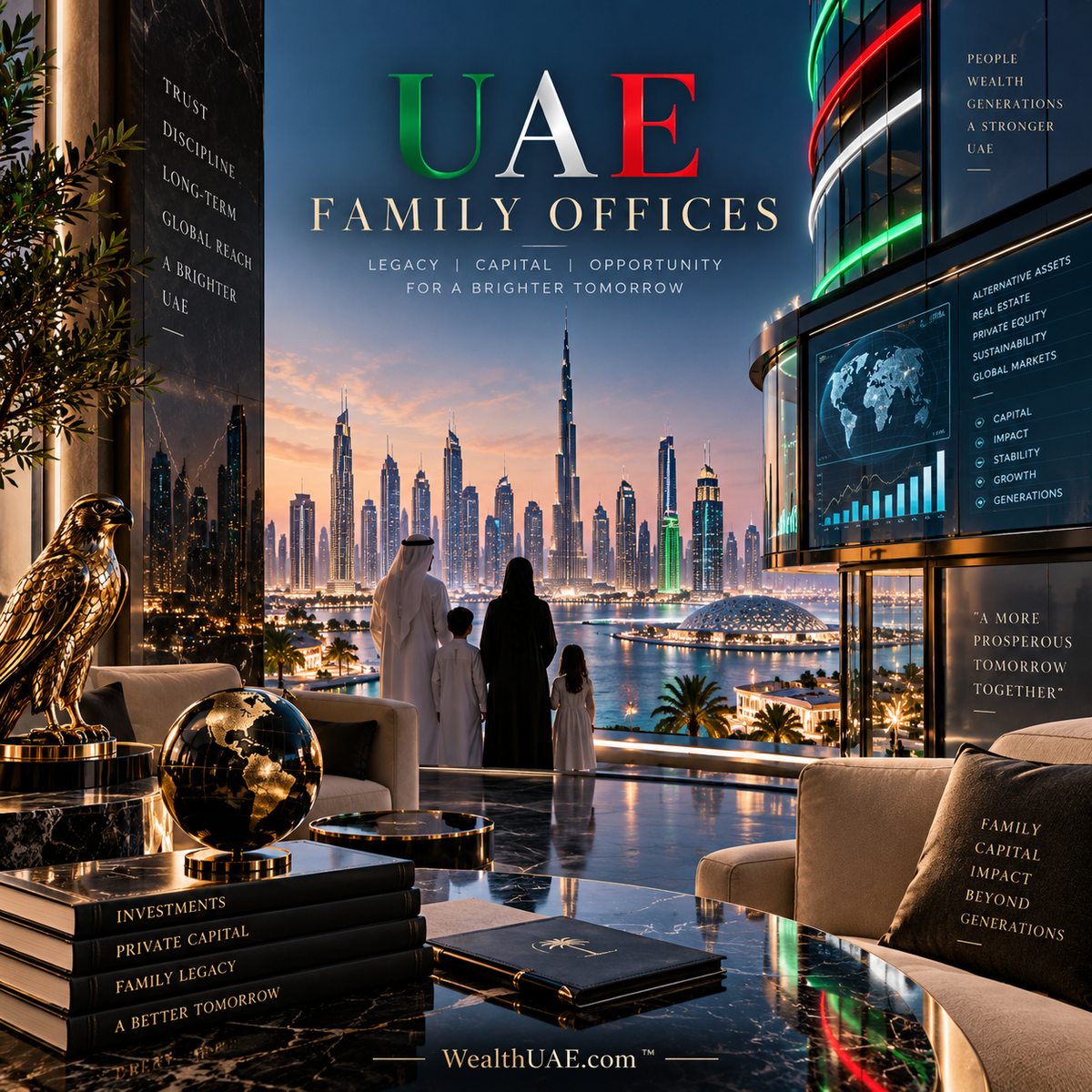
UAE Family Offices: Legacy, Governance and Next-Gen Wealth is ultimately about family offices, governance and legacy planning in the UAE. In the UAE, wealth decisions move quickly because the market itself moves quickly. Careers accelerate, businesses scale, property cycles shift and new residents often have to make several major financial choices in a short period of time. That speed creates opportunity, but it also creates noise. WealthUAE.com ™ is designed to reduce that noise by translating big themes into practical frameworks that readers can actually use.
This guide is written for wealthy families, founders approaching succession and advisers supporting multigenerational planning. The goal is not to offer one-size-fits-all advice. Instead, the goal is to explain the principles that make better decisions more likely. When readers understand how structure, discipline and location work together, they can build a plan that is more resilient than any single market trend. Throughout this article we will keep returning to three ideas: clarity, sequence and fit. Clarity means understanding what you are really trying to achieve. Sequence means making decisions in the right order. Fit means choosing solutions that work for your actual life rather than somebody else’s template.
The wider opportunity landscape
A strong starting point is the landscape itself. The UAE offers a rare combination of mobility, infrastructure, service quality and international access. That matters because wealth is easier to grow when your environment supports entrepreneurship, access to information and efficient execution. In practical terms, the country gives investors multiple lanes: listed markets, private businesses, real estate, professional services, cross-border structuring and a network of specialized hubs. The real opportunity lies in combining those lanes thoughtfully instead of treating them as isolated decisions.
The deeper opportunity behind turning wealth from an asset pool into a governed system that supports generations is that investors can build a more intentional system. That system should connect governance, reporting, education, operating agreements and aligned decision-making. When those pieces are disconnected, progress feels busy but not necessarily productive. When they are coordinated, the same amount of energy tends to create better outcomes because every decision reinforces the next one.
Build a practical decision framework
The next step is turning the theme into a framework. Start with a simple written objective: what is the role of this decision in your wider financial life? Is it meant to increase income, improve resilience, support family goals, simplify administration or create long-term upside? Once the role is clear, define the constraints. Those usually include budget, time horizon, liquidity needs, risk tolerance, documentation requirements and any cross-border obligations. Constraints are not a weakness. They are what make strategy realistic.
After the objective and constraints are clear, list your available options and rank them against the same criteria. This avoids a common mistake in the UAE: judging opportunities by excitement instead of suitability. Excitement often comes from proximity to new ideas, fast sales cycles and social proof. Suitability comes from alignment. An aligned decision may not feel as dramatic in the moment, but it tends to produce better outcomes because it fits your operating reality.
Think in layers, not isolated moves
One of the best habits for readers following family offices, governance and legacy planning in the UAE is to think in layers. The first layer is stability. That includes liquidity reserves, manageable obligations and a clear administrative foundation. The second layer is growth. That is where investing, property, business ownership or expansion choices often sit. The third layer is governance. Governance covers documentation, reporting, communication with family members or partners and a process for reviewing major decisions. People usually want to jump to growth first, but stable wealth systems are usually built in the opposite order.
Another useful habit is to separate strategic assets from tactical experiments. Strategic assets are the parts of your financial life designed to compound quietly over time. Tactical experiments are the smaller opportunities you are willing to test without relying on them. When readers fail to make that distinction, they sometimes overload the portfolio with complexity. When they do make the distinction, they can remain curious without putting core objectives at risk.
How the emirates and hubs shape the decision
Location is also a major variable in the UAE. Abu Dhabi, Dubai and the other emirates are connected, but they do not play identical roles. Abu Dhabi often appeals to readers who value institutional depth, infrastructure and patient capital. Dubai often appeals to readers who prioritize network density, deal flow and global commercial connectivity. Other emirates can offer cost advantages, industrial access, port relevance or lifestyle fit. The important point is not to assume that the most visible option is automatically the best one. The better question is which location supports the decision you are trying to make.
This location lens is why internal linking matters across the site. A reader exploring family offices, governance and legacy planning in the UAE may also need our guides on UAE financial hubs, UAE investing, financial planning and offshore UAE finance. These topics are connected in practice, so they should also be connected on the page.
Common mistakes and better habits
Common mistakes are surprisingly consistent. The first is acting before writing down the objective. The second is creating unnecessary complexity because something sounds sophisticated. The third is underestimating documentation and follow-through. The fourth is ignoring the interaction between personal finances and business decisions. A fifth mistake is assuming that a good environment removes the need for discipline. In reality, a dynamic environment increases the value of discipline because there are more decisions competing for attention.
A better approach is to review decisions through a simple filter. Ask: does this move strengthen the balance between flexibility, growth and control? Does it make the next important decision easier? Does it improve the quality of the overall wealth system? If the answer is no, the opportunity may still be real, but it may not be right for you right now. That is a subtle distinction, yet it protects a lot of capital over time.
Action checklist and final perspective
To turn ideas into action, create a ninety-day checklist. Review cash flow and reserves. Clarify the role of the decision within the wider plan. Shortlist relevant advisers or service providers. Compare at least three options using the same criteria. Set decision rules in advance. Decide how results will be measured and when the plan will be reviewed. Most wealth progress comes from repeating this calm process across many decisions rather than finding a single perfect move.
If you want to keep learning, continue with UAE Financial Planning , Offshore UAE Finance , Islamic Finance & Sukuk. Together these pages create a more complete picture of Wealth UAE, UAE financial planning, UAE hubs, UAE taxes and offshore UAE finance. UAE Family Offices: Legacy, Governance and Next-Gen Wealth works best when it is treated as one part of a broader system, and that broader system is exactly what WealthUAE.com ™ is built to help readers understand.